

This researched article is available in English and български.
Ancient Theatre of Philippopolis
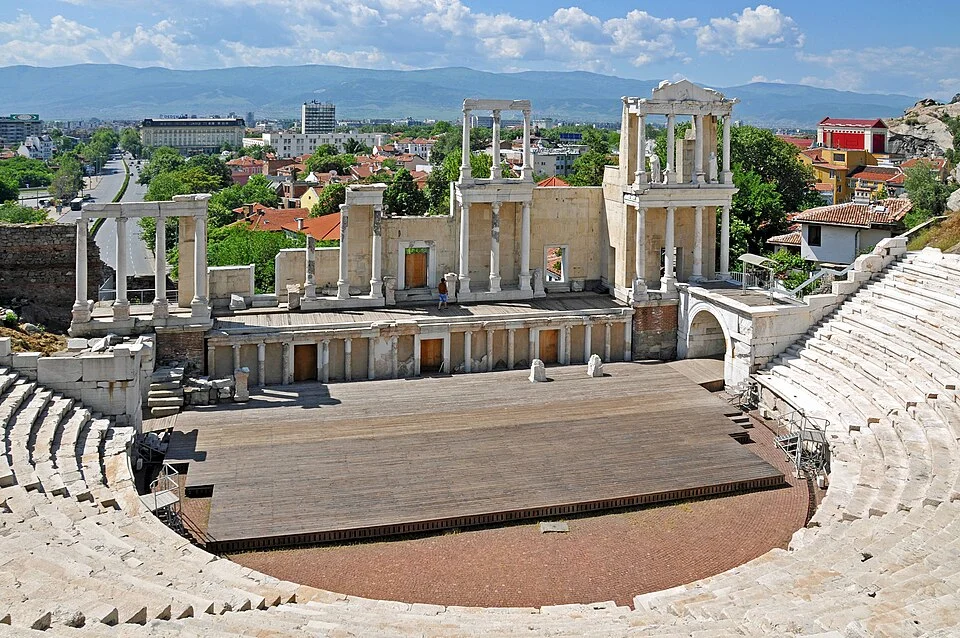
The Ancient Theatre combines Roman public architecture with a functioning modern stage.
 Open and enlarge photograph
Photo: Dennis G. Jarvis · CC BY-SA 2.0 · Retained optimized WebP from the existing editorial collection; no additional modification.
The story of this place
In the hollow between Dzhambaz and Taksim hills, the theatre formed a major public space in Philippopolis. Marble seating and stage architecture explain how spectators and performances were organised. An inscription has shifted the proposed construction date towards the late first century, correcting older popular accounts that associated the building only with Trajan. The theatre also accommodated public assemblies, rather than drama alone. Modern restoration enables concerts and theatrical productions to continue. This makes the monument a living cultural venue, while requiring visitors to distinguish ancient elements from work supporting its present use. Its public history is as important as the familiar panoramic view across the seating.
What the evidence shows
- Concentric rows of marble seats survive.
- An inscription supports dating construction to the 90s CE.
Hypotheses and open questions
Older accounts give a different date; this entry follows the municipal visitor page that explicitly cites the inscription.
Myths and local traditions
The sources consulted do not document a reliable local tradition. We do not invent legends to fill the gap.
Sources and verification
These accounts are editorial summaries. The sources below let you check dates, discoveries and interpretations.
- Visit Plovdiv: Ancient Theatre ↗www.visitplovdiv.com
- Община Пловдив: археологически забележителности ↗www.plovdiv.bg