

This researched article is available in English and български.
Ratiaria
The Roman city near Archar combines monumental finds with a difficult history of damage and conservation.
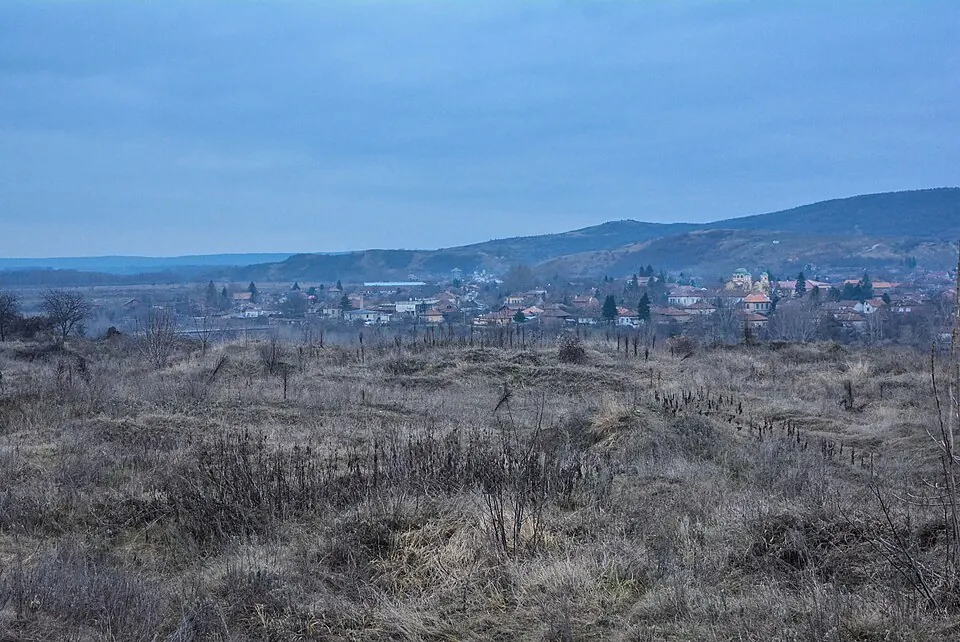 Open and enlarge photograph
Photo: Valio 0 · CC BY 3.0 · Resized proportionally to a maximum of 960 px and converted to WebP; no crop or scene edits.
The story of this place
Ratiaria began as a Roman centre on the Danube frontier. The remains near Archar and objects preserved in museums reveal urban life beyond its military role. A limestone sarcophagus dating to the second half of the second century, now in the National Archaeological Museum, carries garlands, a horseman and mythological figures. The site’s modern history is also marked by extensive looting. Rescue work has documented and recovered architectural fragments and inscriptions to preserve evidence threatened with loss. Finds from controlled excavation must consequently be distinguished from objects whose original archaeological context has been destroyed or cannot be established.
What the evidence shows
- NAIM preserves an elaborately decorated second-century sarcophagus from Archar.
- Rescue work on inscriptions and architectural fragments is documented for 2010.
Hypotheses and open questions
Looting has destroyed parts of the stratigraphy and original relationships between finds.
Myths and local traditions
The sources consulted do not document a reliable local tradition. We do not invent legends to fill the gap.
Sources and verification
These accounts are editorial summaries. The sources below let you check dates, discoveries and interpretations.
- Областна администрация Видин: община Димово ↗vidin.government.bg
- НАИМ: саркофаг от Арчар ↗naim.bg
- Българско археологическо сдружение: Рациария ↗bgheritage.bg