

This researched article is available in English and български.
Shumen Fortress
A multilayered fortress whose streets and churches preserve a medieval town plan.
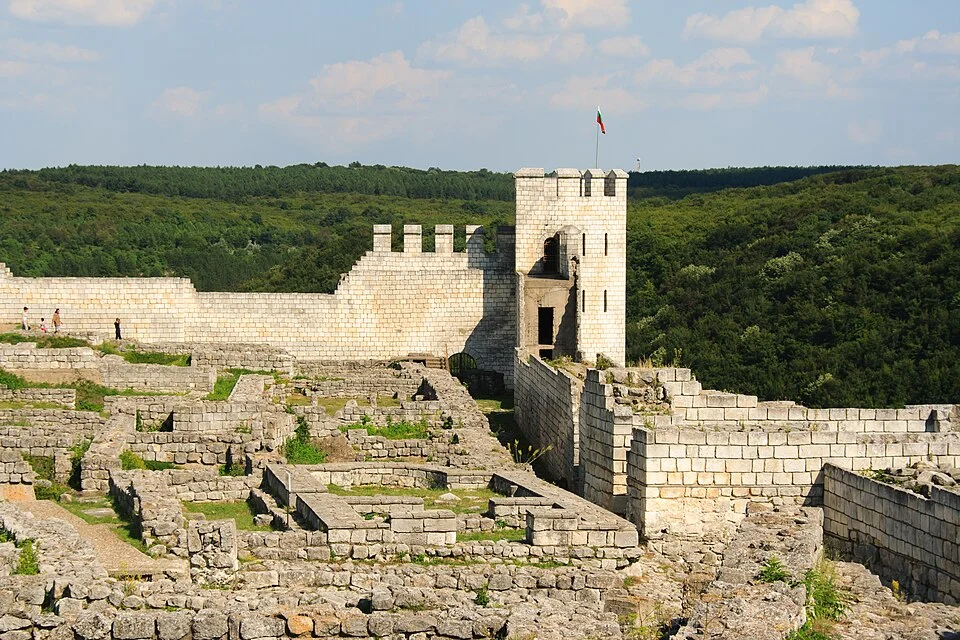 Open and enlarge photograph
Photo: Ferad Zyulkyarov · CC BY 3.0 · Retained optimized WebP from the existing editorial collection; no additional modification.
The story of this place
The fortress on the Shumen Plateau combines traces of a Thracian settlement, Roman fortification and medieval town. Regular excavations began in 1957 under Vera Antonova. The twelfth- to fourteenth-century development is particularly legible: walls, a citadel, narrow streets, houses, water storage and churches occupy the restricted hilltop. Archaeological objects also indicate craft activity, showing that this was more than a military outpost. The fortress continued after its capture in 1388, but destruction during the campaign of Vladislav III in 1444 ended urban life on the hill. Reading the exposed layout helps explain how defence, worship and domestic occupation shared the same confined landscape over successive periods.
What the evidence shows
- Excavations revealed streets and neighbourhoods within the defences.
- The fortress was destroyed in 1444.
Hypotheses and open questions
Individual walls belong to different periods; today’s view does not represent one simultaneous town.
Myths and local traditions
The sources consulted do not document a reliable local tradition. We do not invent legends to fill the gap.
Sources and verification
These accounts are editorial summaries. The sources below let you check dates, discoveries and interpretations.
- РИМ–Шумен: Шуменска крепост ↗museum-shumen.eu
- Министерство на туризма: Шуменска крепост ↗www.tourism.government.bg