

This researched article is available in English and български.
Lovech Fortress
A fortress above old Lovech associated with the 1187 truce and much earlier occupation layers.
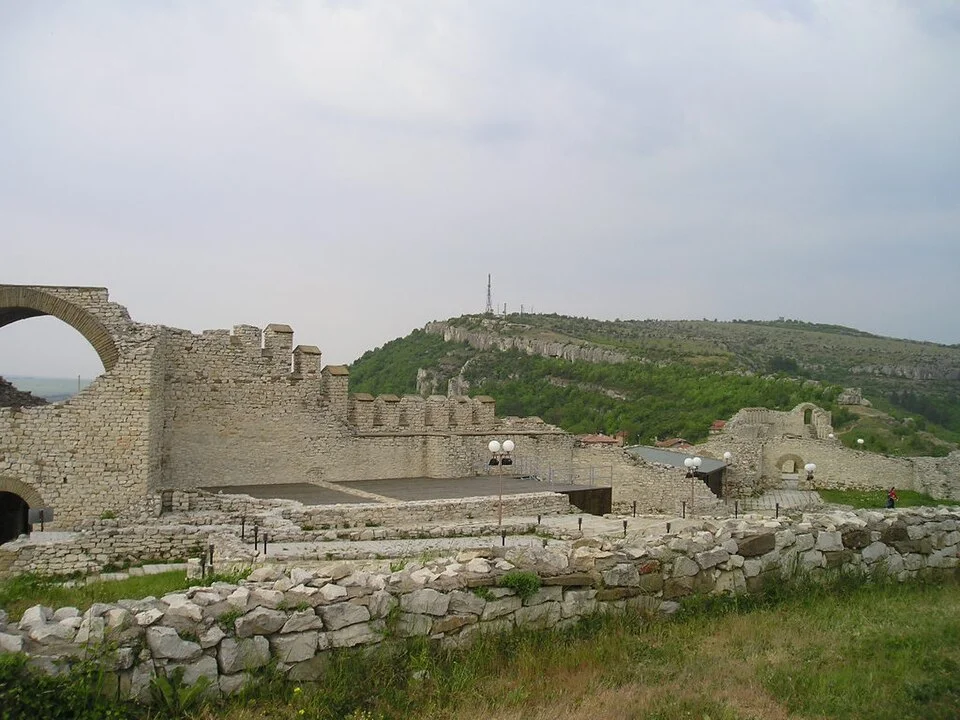 Open and enlarge photograph
Photo: Nk · Public domain · Retained optimized WebP from the existing editorial collection; no additional modification.
The story of this place
Hisarya Hill preserves Copper Age and Thracian occupation predating the medieval fortress. Excavation has recovered house remains, pottery and other evidence of these early communities. The fortress developed during the First Bulgarian Empire and remained in use over a long period. In 1187, a truce concluded nearby between Asen and Peter and Emperor Isaac II Angelos became an important episode in the restoration of Bulgarian statehood. During the thirteenth and fourteenth centuries Lovech was an administrative, commercial and religious centre. The defences therefore belong within a layered urban history, extending well beyond a single siege or ruler.
What the evidence shows
- Hisarya preserves Copper Age and Thracian settlement evidence.
- Ivan Alexander, previously despot of Lovech, became tsar in 1331.
Hypotheses and open questions
The excavated layers belong to different periods; earlier settlements should not be labelled as the medieval fortress.
Myths and local traditions
The sources consulted do not document a reliable local tradition. We do not invent legends to fill the gap.
Sources and verification
These accounts are editorial summaries. The sources below let you check dates, discoveries and interpretations.
- РИМ–Ловеч: Ловешката крепост ↗lovech-museum.bg
- Туристически портал на Ловеч: крепостта ↗tourism.lovech.bg