

Roman Baths of Pautalia
The Roman baths show how mineral water shaped the architecture of ancient Pautalia.
 Open and enlarge photograph
Photo: Спасимир · CC BY-SA 3.0 · Retained optimized WebP from the existing editorial collection; no additional modification.
The story of this place
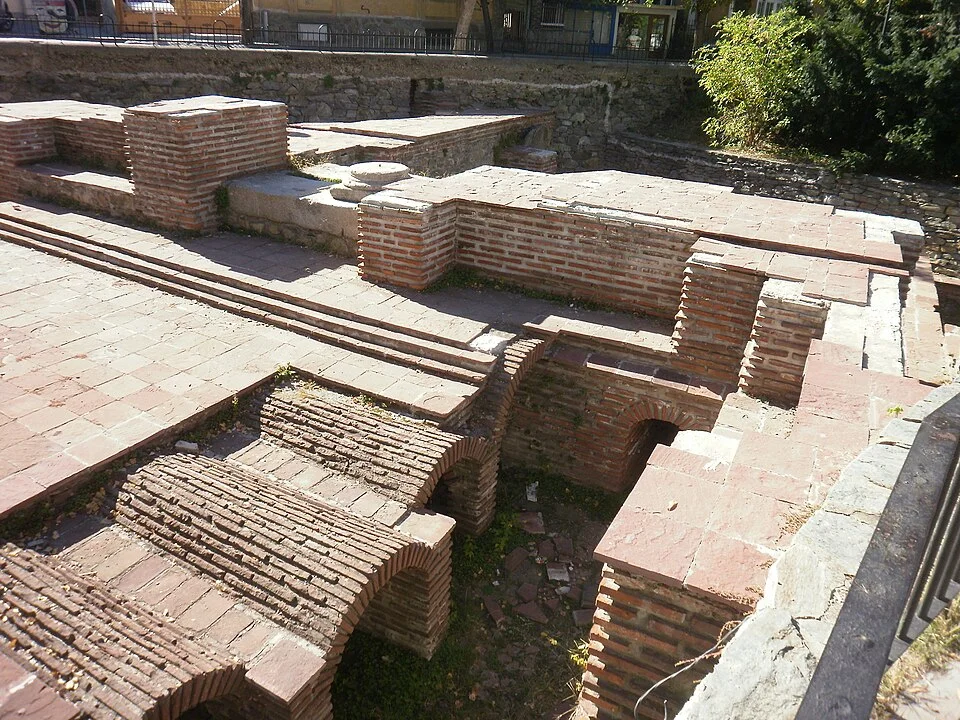
In central Kyustendil, the bath remains show water as an organising element of the Roman town. Large rooms and heating installations reveal the technical workings of a public bathing building. Underfloor spaces and wall channels distributed warmth through the structure. The monument is commonly interpreted in relation to the cult of Asclepius, while the architecture provides the most directly visible evidence. The baths are assigned to the second–third centuries CE. They are a separate archaeological site from Hisarlaka fortress and illuminate a different aspect of Pautalia: public amenities and the use of natural springs. Surviving rooms represent an exposed portion of a larger complex.
What the evidence shows
- Excavated rooms contain underfloor heating.
- Water channels and architectural elements survive.
Hypotheses and open questions
The exposed remains are not the whole bath building; its plan alone cannot establish detailed rituals.
Myths and local traditions
The sources consulted do not document a reliable local tradition. We do not invent legends to fill the gap.
Sources and verification
These accounts are editorial summaries. The sources below let you check dates, discoveries and interpretations.
- Министерство на туризма: Антични терми ↗www.tourism.government.bg
- Туристически портал Кюстендил: Римски терми ↗kustendil.com