

This researched article is available in English and български.
Ohoden–Valoga
An Early Neolithic settlement and ritual complex with burials and a clay structure containing deer skulls.
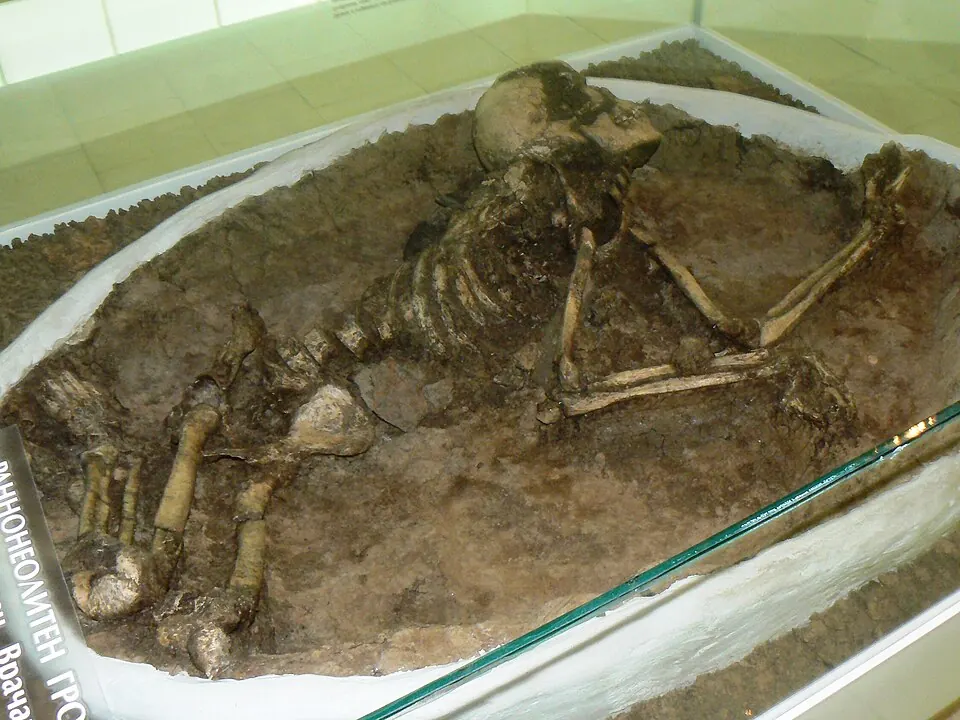 Open and enlarge photograph
Photo: Vassia Atanassova - Spiritia · CC BY-SA 3.0 · Resized proportionally to a maximum of 960 px and converted to WebP; no crop or scene edits.
The story of this place
Ohoden–Valoga preserves houses, burials and ritual evidence from the Early Neolithic. The earliest material is assigned to the end of the seventh and beginning of the sixth millennium BC. A particularly informative discovery is a clay structure excavated in 2011 containing three deer skulls with antlers. It also held a clay deer figurine with a broken head. Burials provide another perspective on the community of early farmers, with some remains presented at Vratsa Museum. Links between the structure, fertility and the sun are proposed interpretations of the ritual; the arrangement of the objects is the directly observed archaeological evidence.
What the evidence shows
- The structure containing three deer skulls was found in 2011.
- The museum presents Early Neolithic burials from the site.
Hypotheses and open questions
The ritual’s precise meaning is not documented in written sources; the solar reading is a hypothesis.
Myths and local traditions
The sources consulted do not document a reliable local tradition. We do not invent legends to fill the gap.
Sources and verification
These accounts are editorial summaries. The sources below let you check dates, discoveries and interpretations.
- РИМ–Враца: Глинен олтар с еленови рога ↗www.vratsamuseum.com
- РИМ–Враца: Гроб №4 ↗www.vratsamuseum.com
- Община Враца: културни обекти ↗old.vratza.bg