

This researched article is available in English and български.
Emporion Pistiros
Pistiros reveals trade connections between inland Thrace and the Greek world.
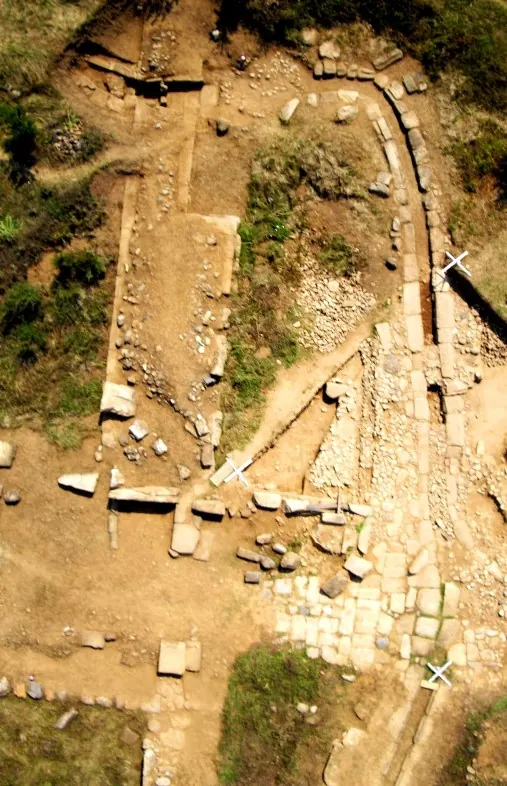 Open and enlarge photograph
Photo: Ivan.giogio · CC BY-SA 4.0 · Resized proportionally to a maximum of 960 px and converted to WebP; no crop or scene edits.
The story of this place
Near Vetren and the Maritsa River, excavations at Pistiros reveal a fortified trading centre of the Classical and Hellenistic periods. A stone street, gateway, buildings and drainage channel indicate an organised settlement. The museum collection in Septemvri complements the architecture with imported pottery, coins and craft objects. A Greek inscription regulating commercial relationships and rights is particularly important because it adds a written perspective to the material evidence. Excavations began in 1988 and distinguish several construction phases. Researchers also identify later productive activity after the settlement’s main urban trading phase. The site therefore illustrates changing economic roles rather than an unchanging Greek enclave.
What the evidence shows
- A gateway, stone-paved street and drainage channel have been excavated.
- The museum displays the inscription and a hoard of 552 coins.
Hypotheses and open questions
The earliest development and parts of the stratigraphy require clarification; pottery style alone does not determine ethnicity.
Myths and local traditions
The sources consulted do not document a reliable local tradition. We do not invent legends to fill the gap.
Sources and verification
These accounts are editorial summaries. The sources below let you check dates, discoveries and interpretations.
- АМ Септември: Емпорион Пистирос ↗archaeological-museum-septemvri.com
- АМ Септември: постоянна експозиция ↗archaeological-museum-septemvri.com