

This researched article is available in English and български.
Pernik Fortress — Krakra
The fortress above Pernik connects archaeological remains with written accounts of Krakra’s resistance.
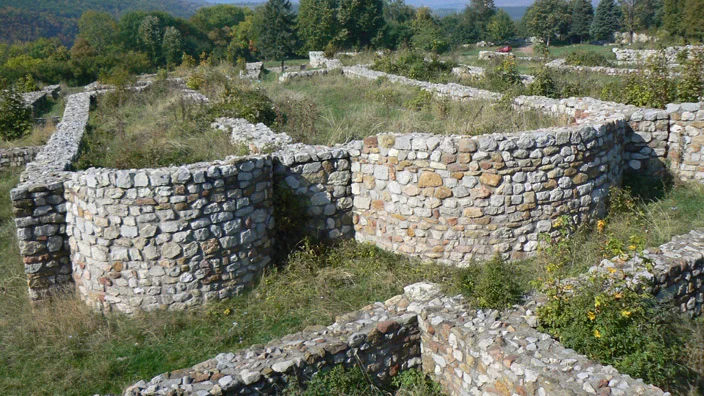 Open and enlarge photograph
Photo: Vassia Atanassova - Spiritia · Public domain · Retained optimized WebP from the existing editorial collection; no additional modification.
The story of this place
The fortified hill beside Pernik has an earlier past but is particularly associated with events of the eleventh century. Byzantine narratives describe the Bulgarian commander Krakra and resistance to Basil II. Archaeological remains supply the material setting: house foundations, churches and defences. The museum highlights a silver seal of Tsar Peter among the finds. That object has a concrete historical identity, whereas accounts of the ruler’s visit and meeting with a saint belong to tradition. A visit therefore combines a defensive landscape with medieval building remains and the later memory of a celebrated stronghold. Modern presentation helps reveal the plan but should not be confused with untouched medieval architecture.
What the evidence shows
- Skylitzes’ chronicle describes Krakra’s resistance.
- Excavations revealed three Christian churches and a seal of Tsar Peter.
Hypotheses and open questions
Legendary details about the sieges should not be treated as independently confirmed evidence.
Myths and local traditions
A tradition explains the name Karvavoto, “the bloody place”, through casualties during a prolonged Byzantine siege; the museum labels it a legend.
Sources and verification
These accounts are editorial summaries. The sources below let you check dates, discoveries and interpretations.
- РИМ Перник: Средновековна крепост Перник ↗museumpernik.com
- Visit Bulgaria: крепост Кракра ↗visitbulgaria.com