

This researched article is available in English and български.
Varna Chalcolithic Necropolis
A Copper Age cemetery with exceptional gold finds and evidence of varied burial practices.
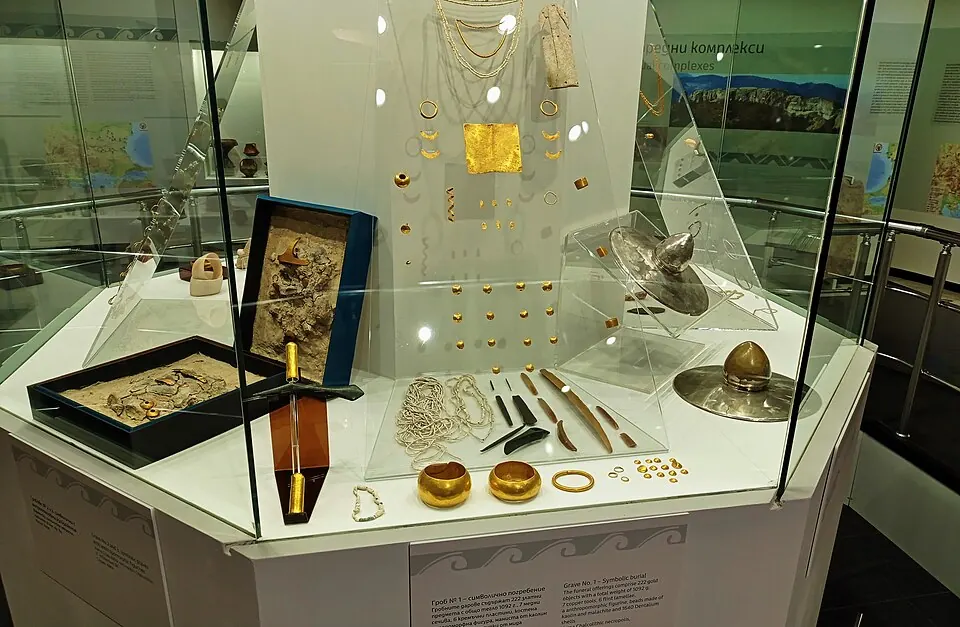 Open and enlarge photograph
Photo: Ivano Giambattista · CC0 · Resized proportionally to a maximum of 960 px and converted to WebP; no crop or scene edits.
The story of this place
The Varna Chalcolithic Necropolis was discovered accidentally in 1972 and dates to the second half of the fifth millennium BC. Differences between graves and the distribution of gold, copper and other objects support research into social relationships within the community. Alongside burials are symbolic assemblages without a body. Important finds are displayed in Varna’s Archaeological Museum. The meaning of individual rituals and the titles of the deceased cannot be read directly from their possessions. Gold is spectacular, but the site’s scientific value also depends on the context of every object.
What the evidence shows
- The cemetery was discovered in 1972.
- Some symbolic funerary assemblages contain no human body.
Hypotheses and open questions
Calling a buried individual a “king” is an interpretation, not an attested prehistoric title.
Myths and local traditions
The sources consulted do not document a reliable local tradition. We do not invent legends to fill the gap.
Sources and verification
These accounts are editorial summaries. The sources below let you check dates, discoveries and interpretations.
- РИМ–Варна: Варненският некропол ↗www.museumvarna.com
- РИМ–Варна: златото от некропола ↗www.museumvarna.com