

This researched article is available in English and български.
Slatina Neolithic Settlement
Slatina’s early Neolithic houses reveal the domestic life of early farming communities in the Sofia basin.
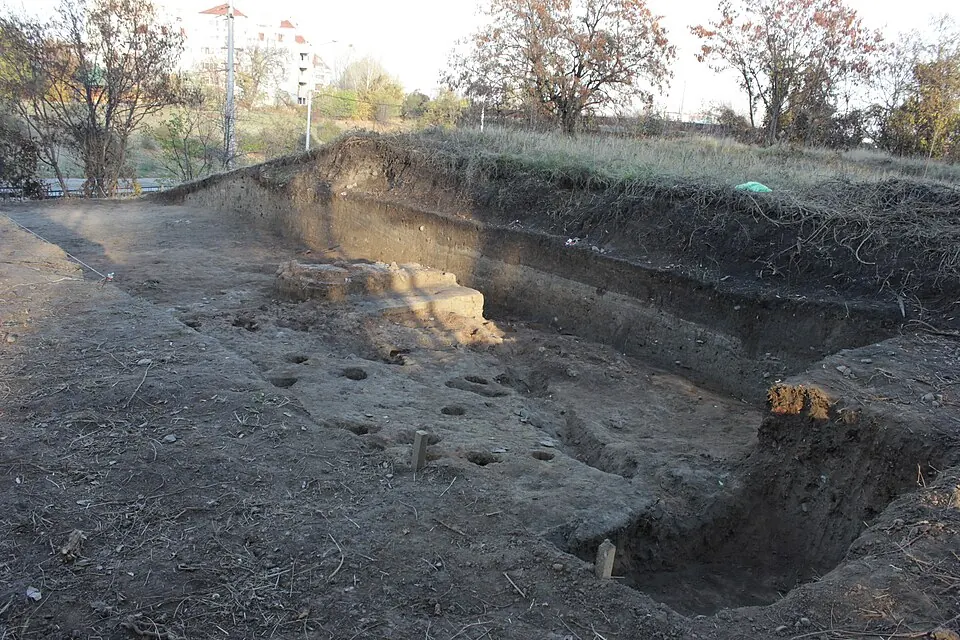 Open and enlarge photograph
Photo: Edal Anton Leftwerov · CC BY-SA 3.0 · Resized proportionally to a maximum of 960 px and converted to WebP; no crop or scene edits.
The story of this place
Slatina takes the story of Sofia back well before Roman Serdica, to farming communities of the sixth millennium BCE. Excavations have exposed houses and objects connected with food preparation and household production. One large building contained a hearth, facilities for keeping and grinding grain, tools and traces of weaving equipment. The fire that destroyed it helped preserve evidence of its internal organisation. Later campaigns have added architectural information, but the settlement has not been excavated completely. Its significance lies especially in ordinary skills: building durable homes, managing harvested crops and making the objects needed by an established community.
What the evidence shows
- An excavated house covered 118 square metres.
- Finds include stone, flint, bone and clay objects.
Hypotheses and open questions
Only part of the settlement has been excavated; its inhabitants’ names, language and precise beliefs are unknown.
Myths and local traditions
The sources consulted do not document a reliable local tradition. We do not invent legends to fill the gap.
Sources and verification
These accounts are editorial summaries. The sources below let you check dates, discoveries and interpretations.
- РИМ София: раннонеолитно селище Слатина ↗sofiahistorymuseum.bg
- РИМ София: проучвания на Слатина ↗sofiahistorymuseum.bg