

This researched article is available in English and български.
Baba Vida Fortress
A Danube-side medieval castle preserves building phases above the remains of Roman Bononia.
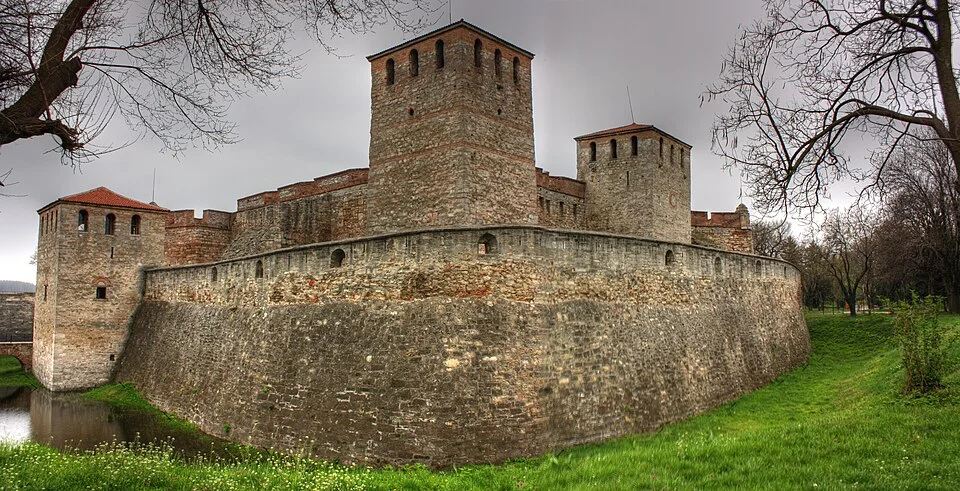 Open and enlarge photograph
Photo: Klearchos Kapoutsis from Paleo Faliro, Athens, Greece. · CC BY 2.0 · Retained optimized WebP from the existing editorial collection; no additional modification.
The story of this place
Baba Vida developed through successive building campaigns rather than a single construction event. Medieval work began in the tenth century above ancient defences associated with Bononia, while major elements took shape during the twelfth to fourteenth centuries. Two defensive circuits, towers and a moat protected a residence positioned beside the Danube. Later alterations adapted its buildings to changing military uses. The castle has welcomed museum visitors since 1958. Its surviving masonry therefore records several different periods: a walk through the courtyards and rooms is also a chance to distinguish a medieval residence from its subsequent military adaptations.
What the evidence shows
- Medieval construction reused remains of Bononia.
- The castle has inner and outer defensive circuits.
Hypotheses and open questions
The Vida legend does not identify a historically documented founder.
Myths and local traditions
The museum records a legend about Vida, a nobleman’s daughter who chose independence after her sisters Kula and Gamza married unhappily and built a fortress. This is a folkloric explanation of the name, not an archaeological fact.
Sources and verification
These accounts are editorial summaries. The sources below let you check dates, discoveries and interpretations.
- РИМ–Видин: Баба Вида ↗rimvidin.bg
- Министерство на туризма: Баба Вида ↗visitbulgaria.com