

This researched article is available in English and български.
Aladzha Monastery
A rock monastery with cells, churches and evidence of medieval monastic life.
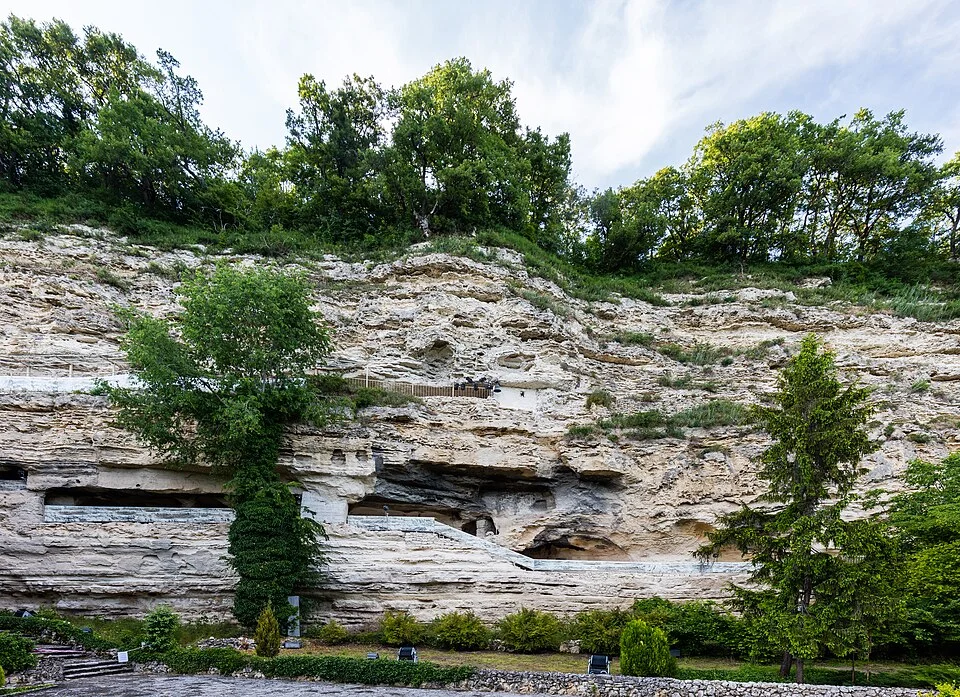 Open and enlarge photograph
Photo: Diego Delso · CC BY-SA 4.0 · Retained optimized WebP from the existing editorial collection; no additional modification.
The story of this place
Aladzha Monastery occupies chambers cut into a limestone cliff in Golden Sands Nature Park. Its medieval monastic community is associated with the thirteenth and fourteenth centuries. Two levels contain spaces for worship, accommodation, meals and burial, including cells, a refectory, a kitchen, a chapel and an ossuary. The Shkorpil brothers began systematic investigation in the late nineteenth century. Nearby caves known as the Catacombs yielded fifth- and sixth-century material, but those finds should not be used to date every part of the medieval monastery. Its original Christian dedication remains unknown. The community declined after the medieval period, while a museum presentation now helps visitors read the surviving rooms alongside their archaeological history.
What the evidence shows
- The monastery is arranged on two rock-cut levels.
- The Catacombs contain early Christian finds.
Hypotheses and open questions
The original dedication and precise date of final abandonment remain uncertain.
Myths and local traditions
A tradition recorded by Karel Shkorpil links the monastery with the Holy Saviour. It is folklore, not proof of the original dedication.
Sources and verification
These accounts are editorial summaries. The sources below let you check dates, discoveries and interpretations.
- РИМ–Варна: Аладжа манастир ↗www.museumvarna.com
- Община Варна: Aladzha Monastery ↗visit.varna.bg