

Ten unforgettable figures inside the Sveshtari tomb
Female faces, plant-like forms and surviving ancient colours. How to look closely at the caryatids, and why a short visit matters.
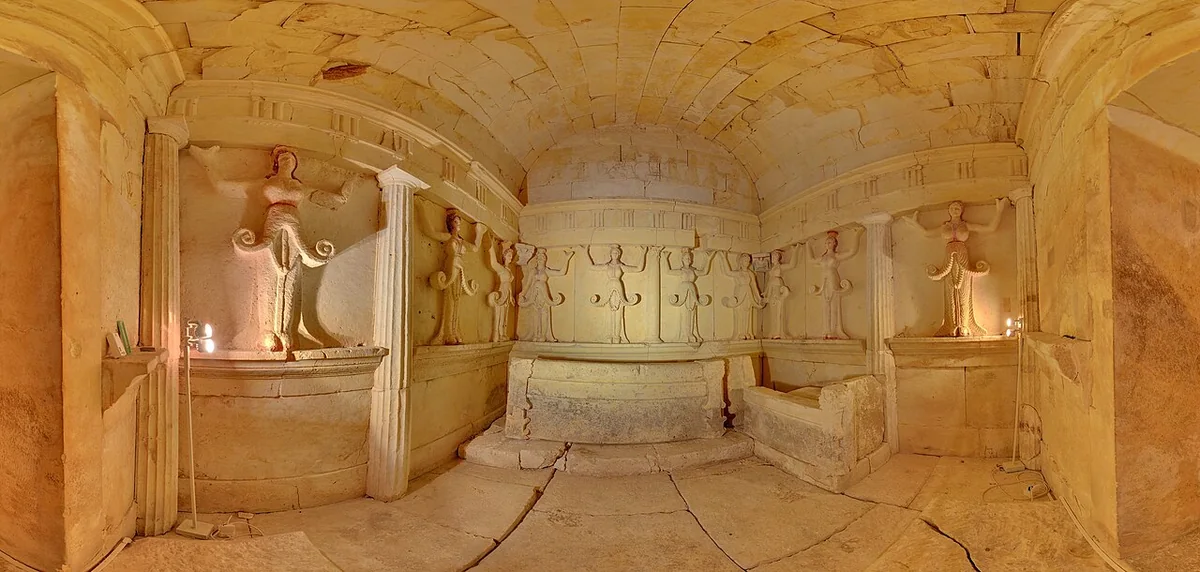 Open and enlarge photograph
Photo: Interact-Bulgaria · CC BY-SA 4.0 · Resized proportionally to a maximum of 1200 px and converted to WebP; orientation respected; no crop, retouching or scene edits.
Begin by looking up
The central chamber’s ten female relief figures make Sveshtari unforgettable. These caryatids combine human and plant-like forms, with painted decoration above. Here ancient stone architecture has faces and colour.
UNESCO highlights the relationship between sculpture and painting and the surviving pigments. Pick one face, follow the outline of its clothing, then look at the entire row. This simple exercise reveals how each figure contributes to the composition. These are surviving archaeological decorations, not illustrations of a modern legend.
Sources: UNESCO World Heritage Centre: Thracian Tomb of Sveshtari
A carefully arranged space beneath the mound
Discovered in 1982 beneath Ginina Mound in the Sboryanovo reserve, the tomb dates to the first quarter of the third century BC according to Isperih Museum. A passage leads to three vaulted rooms built from large limestone blocks.
Notice the movement from entrance to interior before concentrating on decoration. Which chamber draws your attention? Archaeologist Maria Chichikova made an important contribution to investigating this tomb, recorded by Bulgaria’s National Archaeological Institute with Museum. The monument’s modern story includes the people who studied it.
Sources: Исторически музей – Исперих: Тракийска царска гробницаНАИМ–БАН: Скръбна вест – почина Мария Чичикова
Not every Sveshtari discovery comes from this tomb
Sboryanovo is a wider archaeological landscape. The gold treasure discovered by Diana Gergova’s team in 2012 came from the Great, or Omurtag, Mound: a different site from the tomb with caryatids.
NAIM describes jewellery and horse-harness fittings deposited in a wooden chest. When a photograph says “Sveshtari”, check the precise findspot. Otherwise, objects discovered in different places can become one imaginary room. A village name helps locate a discovery, but cannot replace its archaeological context.
Sources: НАИМ–БАН: Новооткритото тракийско златно съкровище в Голямата (Омуртагова) могила (2012)
A short visit helps the monument endure
Visits are guided, with limits on group size and time inside. The museum explains that temperature and humidity must be controlled to protect the surviving decoration.
Prepare one question at the visitor centre: which colours survive, or how the ancient fabric differs from the protective structure. Follow the guide’s instructions, then revisit the photographs and labels afterwards. Check current arrangements with Isperih Museum, particularly for group travel. Looking carefully does not require a long stay beside the original.
Sources: Исторически музей – Исперих: Тракийска царска гробница
Sources and verification
An editorial account based on the sources below. Finds, their interpretation and folklore are distinguished.
- UNESCO World Heritage Centre: Thracian Tomb of Sveshtari ↗
Ten caryatids, combined human and plant forms, painting and surviving polychromy.
- Исторически музей – Исперих: Тракийска царска гробница ↗
Discovery in 1982, Ginina Mound, dating, plan, limestone construction and controlled access for climate conservation.
- НАИМ–БАН: Скръбна вест – почина Мария Чичикова ↗
Maria Chichikova’s contribution to investigating the tomb with caryatids.
- НАИМ–БАН: Новооткритото тракийско златно съкровище в Голямата (Омуртагова) могила (2012) ↗
The separate findspot of the 2012 treasure, Diana Gergova’s team and the objects described.
History in photographs
Documentary photographs with author and source. Museum displays and reproductions are identified.
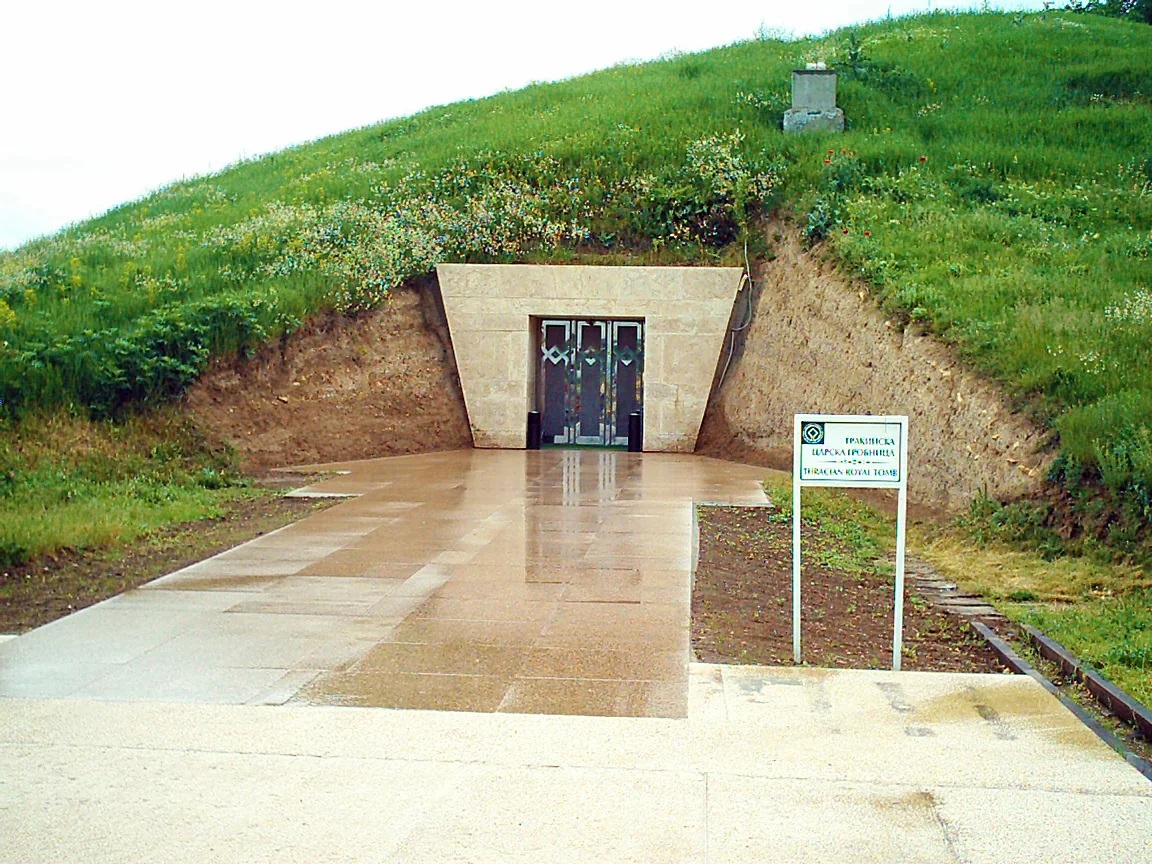 Open and enlarge photograph
Photo: Edal Anton Lefterov · CC BY-SA 3.0 · Resized proportionally to a maximum of 1200 px and converted to WebP; orientation respected; no crop, retouching or scene edits.