

Thracian Tomb of Kazanlak
A Thracian tomb with Hellenistic murals, interpreted for visitors through a nearby replica.
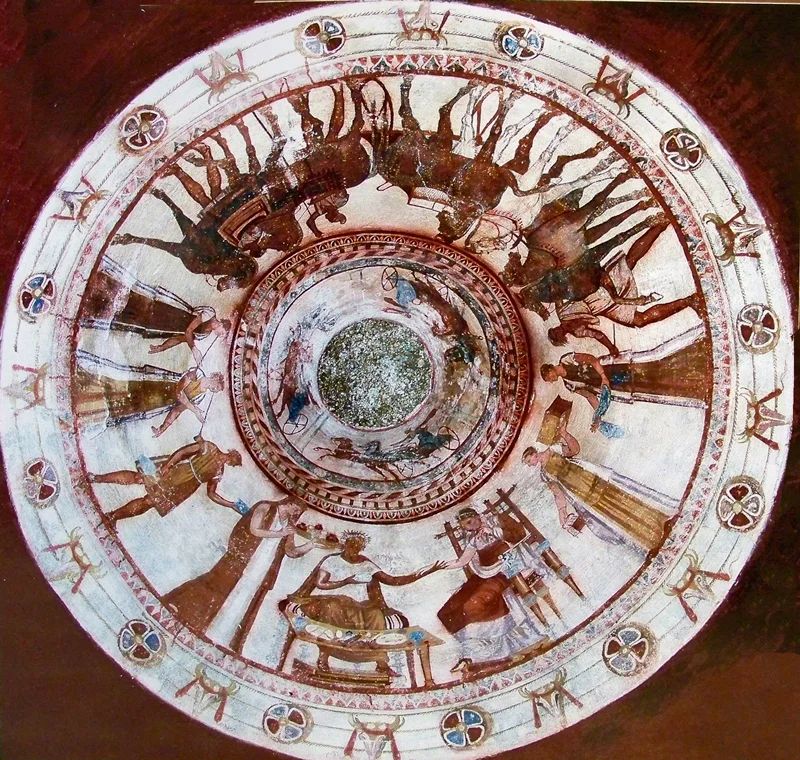 Open and enlarge photograph
Photo: Kmrakmra · CC BY-SA 3.0 · Retained optimized WebP from the existing editorial collection; no additional modification.
The story of this place
The Kazanlak Tomb was discovered accidentally in 1944 in what is now Tyulbeto Park. Dating to the late fourth century BC, it belongs to a large Thracian necropolis in the region of Seuthopolis. Murals in its corridor and circular burial chamber provide important evidence for the art and funerary imagery of Hellenistic Thrace. UNESCO inscribed the monument in 1979. To protect the original painted surfaces, the principal visitor experience is the nearby replica. This allows close study of the compositions while limiting pressure on the fragile original. The scenes should not be read as photographic portraits of securely named historical figures: identities and the precise meanings of some images remain subjects of interpretation.
What the evidence shows
- The tomb was discovered in 1944.
- It entered the World Heritage List in 1979.
Hypotheses and open questions
The names of the depicted and buried individuals are not securely established.
Myths and local traditions
The sources consulted do not document a reliable local tradition. We do not invent legends to fill the gap.
Sources and verification
These accounts are editorial summaries. The sources below let you check dates, discoveries and interpretations.
- ЮНЕСКО: Thracian Tomb of Kazanlak ↗whc.unesco.org
- Община Казанлък: 80 години от откриването ↗www.kazanlak.bg
- Национален исторически музей: Казанлъшка гробница ↗historymuseum.org