

This researched article is available in English and български.
Kaleto Fortress, Montana
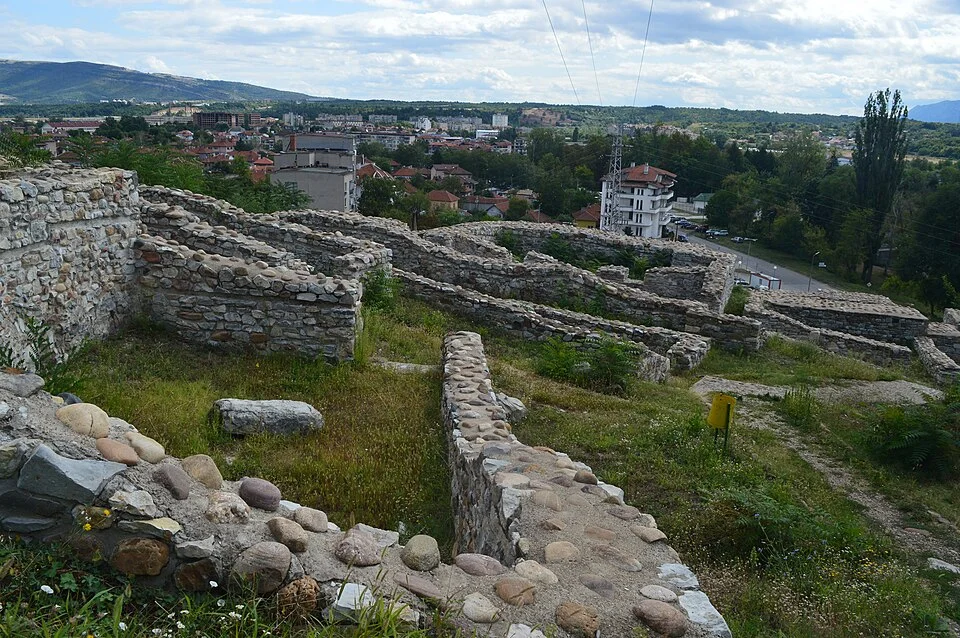
The fortified hill preserves prehistoric houses, Roman defences and later settlement remains.
 Open and enlarge photograph
Photo: Vaska gru · CC BY-SA 4.0 · Retained optimized WebP from the existing editorial collection; no additional modification.
The story of this place
Kaleto above Montana records repeated use of the same elevated location. The lowest cultural layers contain Copper Age houses. Roman walls, a gate with a tower and rooms associated with the fortification were uncovered above them; an Early Christian basilica also lies outside the defensive circuit. Following destruction towards the end of antiquity, a later settlement developed among the remains. These layers do not describe an unchanged fortress lasting for millennia, but successive communities and building decisions. Museum finds and the open-air site together allow visitors to compare military architecture, religious life and domestic occupation across those different periods.
What the evidence shows
- Excavations uncovered a gate and tower dating to the third–fourth centuries.
- Copper Age houses occur in the lowest layers.
Hypotheses and open questions
The museum attributes the sixth–seventh-century destruction to Avars or Slavs without identifying one group conclusively.
Myths and local traditions
The sources consulted do not document a reliable local tradition. We do not invent legends to fill the gap.
Sources and verification
These accounts are editorial summaries. The sources below let you check dates, discoveries and interpretations.
- РИМ–Монтана: Античната крепост Калето ↗montanahm.eu
- Община Монтана: Монтана и Пирот ↗www.montana.bg