

This researched article is available in English and български.
Nebet Tepe
Nebet Tepe preserves defences and successive stages in Plovdiv’s long history.
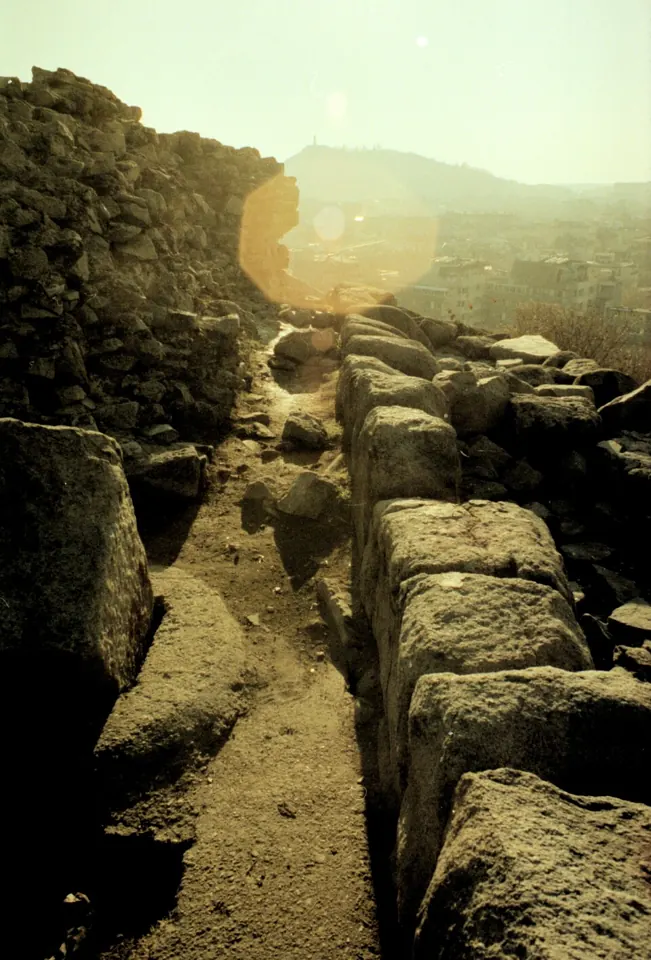 Open and enlarge photograph
Photo: Michal Valach · CC BY-SA 4.0 · Resized proportionally to a maximum of 960 px and converted to WebP; no crop or scene edits.
The story of this place
At the northern end of Plovdiv’s Three Hills, Nebet Tepe preserves several settlement and fortification periods. Its role changed as the town developed from a Thracian centre into Roman Philippopolis and a medieval stronghold. Massive stone masonry and a water-storage installation help explain defence and supply. The walls do not all belong to one period, and every visible line cannot be assigned to a particular ruler. Looking towards the modern city offers a useful perspective on the relationship between the defended heights and neighbourhoods below. The archaeological value lies in this accumulated sequence, rather than in presenting the hill as a single intact ancient fortress.
What the evidence shows
- Defensive masonry from different periods survives.
- A medieval water reservoir is documented.
Hypotheses and open questions
Individual walls have different dates; mythical Eumolpus is not an archaeologically established founder.
Myths and local traditions
Eumolpia is associated with the mythical singer and ruler Eumolpus; this origin tradition is distinct from archaeological identification.
Sources and verification
These accounts are editorial summaries. The sources below let you check dates, discoveries and interpretations.
- Visit Plovdiv: Небет тепе ↗www.visitplovdiv.com
- Община Пловдив: археологически забележителности ↗www.plovdiv.bg